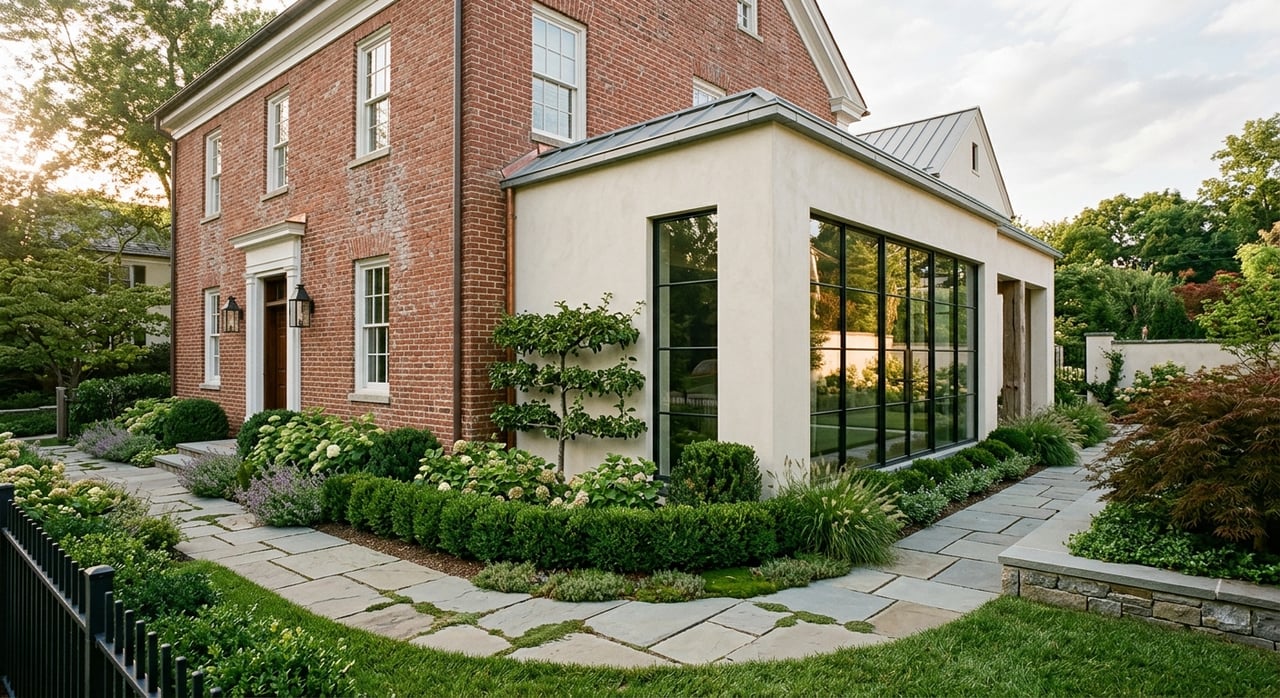
If you are house hunting in Arlington, home age is not just a style preference. It can shape your budget, your maintenance plan, your daily lifestyle, and even where you are most likely to find the right fit. In a market with a large share of older homes and a development pattern that channels much of the newer inventory into urban corridors, this choice matters more than many buyers expect. Here’s how to compare newer and older homes in Arlington with more confidence. Let’s dive in.
Why home age matters in Arlington
Arlington has a very specific housing mix. As of July 2024, the county had 124,873 housing units, and the market is dominated by multifamily housing at 71.5%, compared with 22.7% single-family detached and 5.8% single-family attached homes.
That matters because “newer home” in Arlington often means a condo, apartment-style residence, or infill townhome rather than a newly built detached house. On the other side, many of the county’s older options are detached homes, older condos, or garden-apartment style properties with more established surroundings.
The age split is especially noticeable in the single-family market. Arlington County says roughly 75% of the single-family housing stock was built before 1960, and single-family homes are being replaced at about 8% per decade. For you as a buyer, that often means weighing a renovated older home against a smaller pool of newer construction.
Where newer homes are more common
Newer housing in Arlington tends to cluster in the county’s higher-density planning corridors. These include Rosslyn, Courthouse, Clarendon, Virginia Square, Ballston, Pentagon City, Crystal City, and Columbia Pike.
County planning has intentionally focused higher-density development along the Rosslyn-Ballston and Richmond Highway Metro corridors, generally near station entrances. Outside those main corridors, Arlington places more emphasis on preserving the defining character of established neighborhoods.
In practical terms, that means newer homes often come with a more urban setting. You may find mixed-use buildings, easier access to transit, and a layout that prioritizes walkability and shared neighborhood amenities over larger private lots.
Crystal City and Pentagon City show this pattern clearly. Arlington describes Crystal City as an area transformed over time into a major mixed-use center, while Pentagon City’s phased plan tied housing growth to Metro-oriented development and included thousands of dwelling units.
What older homes often offer
Older homes in Arlington often stand out for their architectural detail and more settled streetscapes. In areas like Maywood and Cherrydale, the county notes features such as porches, gable-roof forms, mature trees, layered landscaping, bungalows, and other early 20th-century housing styles.
In parts of Columbia Pike, earlier development followed a streetcar-suburb pattern, with buildings closer to the sidewalk and a more traditional street wall. That creates a look and feel many buyers find appealing because it can feel more rooted in the history of the area.
If you care about character, an older home may give you details that are harder to replicate in newer construction. You may also find a neighborhood setting that feels more established from day one.
It is also important to remember that older Arlington housing is not limited to detached homes. The county’s Historic Resources Inventory identified nearly 400 historic garden apartments, shopping centers, and commercial buildings built between about 1909 and 1962, so older multifamily options are part of the picture too.
What newer homes often offer
Newer homes usually appeal to buyers who want a more predictable starting point. From a systems perspective, newer construction can begin with more up-to-date approaches to energy savings, comfort, durability, and ventilation.
The U.S. Department of Energy describes efficient new homes as high-performance homes built to rigorous standards. It also emphasizes that good new construction uses a whole-house approach that combines air sealing, insulation, moisture control, and ventilation.
For you, that can translate into fewer immediate upgrade projects. If your goal is to move in and spend less time thinking about major systems in year one, newer construction may feel like the simpler path.
The tradeoff is often the setting and scale. In Arlington, newer housing is frequently tied to transit-oriented redevelopment, so it may offer a more compact footprint and a more urban lifestyle than an older home in an established residential area.
The real tradeoff: character or convenience
For many Arlington buyers, the decision comes down to what you want your day-to-day life to feel like. Older homes often deliver more architectural individuality and a neighborhood that feels established. Newer homes often deliver updated systems and a location shaped around transit, mixed-use convenience, and walkability.
Neither option is automatically better. The right choice depends on how you prioritize maintenance, location, home style, and your comfort level with future projects.
A helpful way to think about it is this: would you rather inherit character and plan updates over time, or start with newer systems and accept a more urban development pattern? Your answer can narrow the search quickly.
Budget for year one and year five
One of the smartest ways to compare homes is to think beyond the purchase price. Ask yourself how much work, spending, and coordination you are comfortable taking on in the first year and then again a few years later.
If you are buying an older home, energy upgrades may be part of that plan. The Department of Energy says many older homes have less insulation than homes built today, and a home energy assessment can help identify air-sealing and insulation needs.
Arlington gives homeowners several tools that can help reduce the burden of those projects. The county’s Home Energy Hub points residents to no-cost or reduced-cost assessments, utility rebates, weatherization assistance for income-qualifying households, and FHA 203(k) rehab financing for renovations.
That means an older home does not automatically equal overwhelming work. It does mean you should budget realistically and understand which improvements you may want to make over time.
Renovation rules to check before you buy
If you are drawn to an older home because of its charm, make sure you also understand any limits on exterior changes. In Arlington’s local historic districts, exterior rehabilitation is guided by district design standards or, where those do not exist, by the Secretary of the Interior’s Standards.
That can affect visible changes such as windows, additions, and other exterior alterations. If you already have renovation ideas in mind, it is wise to confirm whether the property sits in a local historic district before you close.
This step matters because the right older home for one buyer may not be the right older home for another. If you want turnkey charm, review requirements early so your expectations line up with the property.
How home age can affect assessed value
Age matters in Arlington’s assessment process too. County appraisers separate land value from building value and apply deductions related to age, effective age, condition, and quality.
In simple terms, older homes can depreciate faster in the assessment model unless improvements change the home’s effective age or condition. That does not tell you market value by itself, but it does explain why upgrades and maintenance can matter beyond looks and comfort.
When you compare an older home and a newer one, it helps to ask not only what each property costs today, but also how condition and prior improvements may shape its overall value picture.
A practical way to choose
If you are deciding between newer and older homes in Arlington, start with a few honest questions:
- Do you want updated systems with fewer near-term projects?
- Do you prefer an established streetscape and more architectural character?
- Are you focused on a transit-oriented location?
- Are you comfortable budgeting for insulation, air sealing, or other upgrades?
- Do you want flexibility to change the exterior over time?
Your answers can reveal the better fit faster than a simple pros-and-cons list. In Arlington, this is rarely just about old versus new. It is usually about matching the home’s age, location, and maintenance profile to the way you want to live.
A thoughtful search can save you time, money, and stress, especially in a market where inventory is not uniform. If you want a clear strategy for comparing condos, townhomes, and detached homes across Arlington, working with an advisor who understands both neighborhood context and property condition can make the process much easier.
When you are ready to sort through Arlington’s housing options with a smart, tailored plan, Vie Nguyen offers a concierge approach that helps you compare homes with clarity and move forward with confidence.
FAQs
Which Arlington areas have the most newer construction?
- Newer construction is most commonly associated with Arlington’s higher-density planning corridors, including Rosslyn, Courthouse, Clarendon, Virginia Square, Ballston, Pentagon City, Crystal City, and Columbia Pike.
Can an older Arlington home be made more energy efficient?
- Yes. Older homes can often be improved with insulation and air sealing, and Arlington’s Home Energy Hub lists assessments, rebates, weatherization assistance for eligible households, and rehab financing options.
Are older Arlington homes only detached houses?
- No. Arlington’s older housing stock also includes historic garden apartments and other multifamily buildings, not just detached homes.
Does the age of a home affect Arlington property assessments?
- Yes. Arlington’s assessment process considers age, effective age, condition, and quality when determining building value.
Should you check historic district rules before buying an older Arlington home?
- Yes. If a property is in a local historic district, exterior changes such as windows, additions, and other visible alterations may be subject to design standards or review.