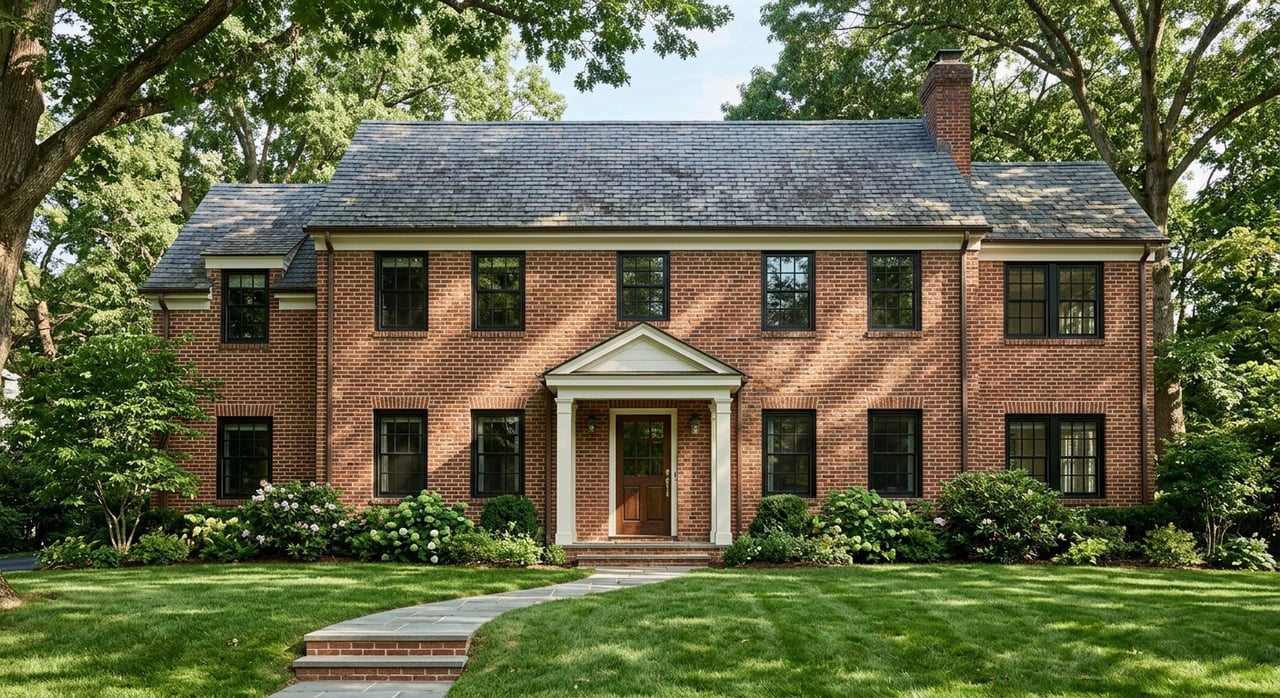
If you have ever wondered why Falls Church’s older homes keep drawing serious attention, even as newer housing rises around them, the answer is fairly simple: they offer something hard to replicate. In a small, highly sought-after city, older homes bring character, established surroundings, and access to the daily conveniences many buyers want most. If you are considering buying or selling in Falls Church, understanding that demand can help you make smarter decisions. Let’s dive in.
Older Homes Are Part of Falls Church’s Core
Older homes are not a niche segment in Falls Church. They are a major part of the city’s housing story.
According to the city’s housing data, 41.3% of housing structures were built before 1959, and 70.8% were built before 1980. That means a large share of the homes you see in Falls Church were built decades ago, making older housing part of the city’s identity rather than an exception.
That matters because Falls Church is also a very compact city. The 2024 comprehensive plan describes it as a 2.1-square-mile community with about 14,600 residents, roughly 11,500 jobs, and about 6,500 housing units. In a place this small, established neighborhoods naturally carry more weight in the market.
Character Still Matters to Buyers
One reason older homes stay in demand is that they often offer details buyers cannot easily find in newer construction. Falls Church planning documents describe a wide mix of older architectural styles, including four-squares, bungalows, federal styles, colonials, farmhouses, and Victorian homes.
Many of these homes feature elements that continue to appeal to today’s buyers, such as front porches and gabled roofs. These details help create a streetscape that feels layered, established, and visually distinct.
The city has also noted that several neighborhoods were established before World War II, with a major period of residential subdivision growth between 1948 and 1965. Areas like Broadmont, Falls Park, Village Ridge Hills, and Virginia Forest are part of that long-standing neighborhood fabric.
Established Streetscapes Support Demand
Buyers are often drawn not just to a house, but to how a block feels. In Falls Church, older neighborhoods tend to have an established rhythm that newer areas often take years to develop.
City design guidelines aim to preserve that visual continuity. New construction is expected to reflect the arrangement, massing, spacing, and setback patterns of existing homes on the block, which helps older neighborhoods remain cohesive even as individual properties change over time.
That consistency supports buyer appeal. Even when a home has been renovated or expanded, the broader neighborhood can still retain the character that drew buyers there in the first place.
Scarcity Keeps Older Detached Homes Competitive
Demand for older homes in Falls Church is also tied to simple supply and demand. The city added about 1,000 housing units over the last decade, but those new units were almost entirely in large multifamily buildings.
At the same time, the supply of single-family homes and townhomes remained flat. For buyers who want a detached home in Falls Church, that means there are only so many options available, and many of them are older homes.
This relatively fixed supply helps explain why existing homes continue to compete well. When new detached inventory is limited, buyers often focus on the homes already woven into the city’s established neighborhoods.
The Market Data Shows Real Demand
The numbers back up the story. Falls Church has remained a high-demand market, and older homes benefit from that overall pressure.
The city reports that the median price of homes sold rose from $580,000 in August 2013 to $792,500 in July 2023. The same data shows that median active listings fell to just 2 in March 2022, while median days on market reached 6 days in July 2023.
Current Census QuickFacts also show a median value of owner-occupied housing units of $1,005,400, with an owner-occupied housing unit rate of 50.2%. Taken together, those figures point to a market where well-located homes remain scarce and highly valued.
Buyers Want Charm and Convenience
Falls Church offers a combination that is difficult to find in many markets: older-home appeal with easy daily access to amenities. That blend helps explain why these homes continue to attract attention.
The city says Falls Church is compact, pedestrian- and cyclist-friendly, and set up so that many shops, restaurants, and attractions are only a 5- to 10-minute walk from one another and from free parking areas. For many buyers, that kind of convenience adds meaningful value to an older home.
Transit access also strengthens demand. City information identifies East Falls Church and West Falls Church as the closest Metrorail stations, along with local bus service and Capital Bikeshare connections.
Lifestyle Amenities Add Staying Power
The appeal of older homes is not only about architecture. It is also about the lifestyle that comes with living in an established part of Falls Church.
The W&OD Trail runs through the northern part of the city and offers a 45-mile paved route with multiple Falls Church crossings. That kind of nearby outdoor access can make established neighborhoods even more appealing to buyers who want both charm and day-to-day usability.
Downtown amenities also reinforce the value of location. The Falls Church Farmers Market is held year-round every Saturday at City Hall and features more than 50 vendors, while pocket parks and gathering spaces help support the city’s neighborhood-centered feel.
Older Homes Often Offer a Clear Upgrade Path
Another reason older homes remain in demand is that many buyers see potential, not just current condition. In Falls Church, the typical path is often to improve or expand an existing home rather than wait for brand-new detached inventory.
City planning materials note a continuing trend of tear-downs, renovations, expansions, and additions to single-family homes. The same materials also point to owners seeking larger homes and greater energy efficiency.
For buyers, this means an older home can be both a place to live now and a property you shape over time. In many cases, phased improvements are part of the value proposition.
The Tradeoff Is Flexibility With Limits
Of course, buying an older home in Falls Church is not just about charm. It is also about understanding what changes may or may not be possible.
The city’s residential guidance explains that setbacks, lot coverage, and building height are regulated by zoning district. The Board of Zoning Appeals may grant relief in some cases involving setbacks, building height, impervious coverage, and additions or expansions on nonconforming lots.
That means flexibility exists, but it is not unlimited. If you are buying an older home with plans to add space or make major exterior changes, it helps to go in with a clear understanding of the property’s zoning context.
Some Homes May Have Preservation Review
A smaller subset of older homes may also involve preservation review. In Falls Church, the Historic Architectural Review Board reviews demolition or moving permits for protected structures in the citywide historic district.
Historic structures include residences built during or before 1910, along with any other structure specifically protected by ordinance. That does not apply to every older home, but it is an important detail to understand if you are considering significant changes to a qualifying property.
In practical terms, buyers benefit from doing early homework. Knowing whether a home falls under an added review layer can help you plan timelines, design goals, and renovation strategy more confidently.
What This Means if You’re Buying
If you are shopping for an older home in Falls Church, it helps to view the process through both a lifestyle lens and a planning lens. You are not just evaluating square footage or finishes. You are also weighing location, long-term potential, and how the home fits into a tightly held market.
A smart buying strategy usually includes:
- Looking closely at the home’s current condition
- Considering whether updates can be done in phases
- Reviewing zoning and lot constraints before assuming expansion potential
- Understanding whether the property may fall under historic review
- Balancing charm, convenience, and future resale value
For many buyers, the right older home is not the one that already has everything done. It is the one that pairs lasting location value with a realistic path for thoughtful improvements.
What This Means if You’re Selling
If you own an older home in Falls Church, demand is working in your favor, but presentation still matters. Buyers often respond strongly to character, but they also want clarity around condition, livability, and future possibilities.
That is where thoughtful preparation can make a real difference. A well-positioned older home can highlight original charm, showcase updates already completed, and help buyers imagine what comes next.
For sellers, the strongest strategy is often a combination of smart pricing, clean presentation, and clear marketing around what makes the home and its location hard to replace. In a market like Falls Church, older homes tend to perform best when their story is told with purpose.
Why Demand Is Likely to Continue
The long-term case for Falls Church’s older homes remains strong because the underlying ingredients are still in place. The city has a substantial older housing stock, a relatively fixed supply of detached homes, and a compact layout with strong everyday amenities.
It also continues to attract buyers who want convenience, neighborhood identity, and access to jobs. The city’s demographics chapter notes that safety, walkability, quality education, and proximity to jobs have made Falls Church increasingly desirable for families, and households with children rose to 36% in 2017 to 2021, up from 31% in 2012 to 2016.
When you combine scarcity, character, and location, it becomes easier to see why older homes continue to hold attention here. They are not simply surviving in the market. They are central to what many buyers are looking for.
If you are thinking about buying or selling an older home in Falls Church, working with an advisor who understands neighborhood nuance, buyer expectations, and presentation strategy can give you a real advantage. For a personalized, concierge-level approach, connect with Vie Nguyen.
FAQs
Why are older homes in Falls Church so popular?
- Older homes in Falls Church remain popular because they combine character, established neighborhood settings, and a limited supply of detached homes in a compact, high-demand city.
How old is much of the housing stock in Falls Church?
- City housing data shows that 41.3% of housing structures were built before 1959, and 70.8% were built before 1980.
Are most new homes in Falls Church detached houses?
- No. The city says about 1,000 housing units were added over the last 10 years, but those additions were almost entirely in large multifamily buildings, while single-family and townhome supply stayed flat.
Can you renovate an older home in Falls Church?
- Yes, many older homes are renovated or expanded, but changes may be shaped by zoning rules related to setbacks, lot coverage, building height, and, in some cases, review for nonconforming lots.
Do all older homes in Falls Church have historic restrictions?
- No. Some protected structures may be subject to review by the Historic Architectural Review Board, but that does not apply to every older home in the city.
What makes older Falls Church homes appealing to buyers today?
- Buyers are often drawn to architectural character, walkable access to shops and amenities, proximity to Metro connections, and the long-term value of owning in an established neighborhood.